
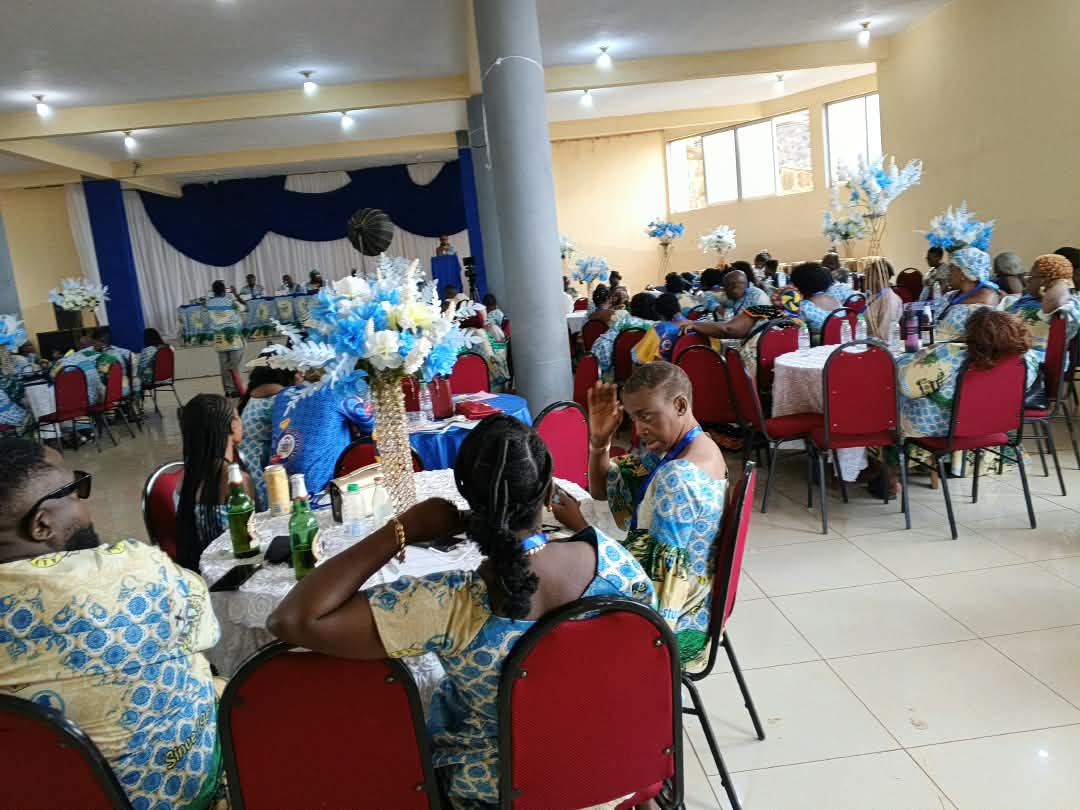
In Muteff, a village tucked into the Ijim hills of Fundong Subdivision in the Boyo Division of Cameroon’s North West Region, there is an unwritten wisdom about community: a tree may grow tall and spread its branches, but it must never forget the roots that hold it upright. Yet, those who water the tree must also remember that they, too, need nourishment. This wisdom found a compelling expression in Bamenda when St Bede’s College Ex-Students gathered for their 2026 Annual General Meeting (AGM), arriving with a renewed understanding that building their alma mater must go hand in hand with building themselves. From Friday, November 13, to Sunday, November 15, 2026, the Bamenda Upstation Pastoral Centre became a melting pot of generations under the theme, “Reconnect, Reignite, Reinvest.” Delegates and batches from across Cameroon, Europe and America converged in an impressive demonstration of alumni solidarity. The opening day began on a sporting note, with activities providing an opportunity for members to rekindle old friendships, demonstrate sporting prowess and rediscover the camaraderie of their school days. The sporting events culminated in a colourful cultural evening at night, during which different batches proudly showcased their cultures and heritage. Through traditional displays, cultural expressions and collective performances, the ex-students celebrated the diversity of their backgrounds while reaffirming the shared identity that binds them as one St Bede’s family. The gathering was, in many respects, a roll call of who had become what in society, bringing together accomplished professionals, entrepreneurs, public servants and other personalities whose journeys had, in different ways, been shaped by St Bede’s. But beyond the excitement of reunion, the three-day gathering produced a significant shift in thinking: after years of concentrating considerable energy and resources on the well-being and development of their alma mater, members must now deliberately invest in their own welfare, economic empowerment and collective prosperity. The AGM identified two initial self-empowerment initiatives: a revolving fund scheme and an agro-industrial project. Inspired by Professor Muhammad Yunus’s revolutionary concept of the Grameen Bank, popularly known as the Bank for the Poor, the proposed St Bede’s Ex-Students revolving fund could become a practical instrument of collective economic empowerment. Yunus demonstrated that access to small amounts of affordable credit, even without conventional collateral, could help hardworking people escape poverty, establish businesses and achieve financial independence.
By pooling resources, providing affordable loans to members for viable income-generating activities and recycling repayments to benefit others, St Bede’s Ex-Students could create a sustainable financial support system built on mutual trust, responsibility and solidarity. The idea is simple but powerful: members should not only reconnect through shared memories but also invest in one another’s economic future. Members were encouraged to continue maturing their minds around additional income-generating projects and activities capable of creating sustainable economic opportunities. The underlying message was that alumni solidarity should translate into practical benefits for members, rather than remain confined to meetings, memories and institutional fundraising.
Another important concern was the growing tendency among members to prioritise batch meetings over chapter meetings. While batches preserve friendships and shared classroom experiences, chapters represent the broader institutional family, bringing together different generations under one common identity. Participants therefore called for renewed commitment to chapter activities, warning against allowing class affiliations to weaken the wider alumni structure. There was equally good reason to celebrate the alma mater. The Principal of St Bede’s College, Rev Father Alexis Abeh reported a 100 per cent success rate at the Ordinary Level GCE last year and over 80 per cent at the Advanced Level. Enrolment now exceeds 500 day and boarding students, while the technical section has already progressed to Form Three.
He also acknowledged the outstanding contribution of the St Bede’s Ex-Students Chapter of the United States and Canada, which has provided close to XAF5 million over the past two years towards investment projects at the college. While applauding these developments and reaffirming their commitment to supporting the school, members expressed disappointment that, following substantial efforts and contributions towards the college’s Golden Jubilee celebrations, the school proprietor had yet to provide updates on the progress of the proposed jubilee projects.
The spirit of reconnection reached another high point during an all-night gala reminiscent of the famous Saturday socials of school days. For many, it was an emotional journey back in time, offering opportunities to embrace classmates and schoolmates they had not seen for decades, sometimes generations. The music, laughter and renewed friendships demonstrated that the bonds forged within school walls can outlive distance and time.
The Bamenda Chapter, led by Mac Anthony and ably supported by Thomas Ngala, received commendation for the smooth organisation of the gathering. National President Prisca Ngwa urged members to demonstrate love, commitment, dedication and genuine concern for alumni activities, emphasising that there was nothing better than bonding together. The 2026 AGM was preceded by an extensive media sensitization and mobilisation campaign aimed at rallying St Bede’s Ex-Students across Cameroon and the diaspora. Leading the national radio outreach was senior alumni representative Priscilla Song of the 1987 batch, who featured on CRTV’s Daybreak programme on November 11, in an interview with Ngu Henry, as well as on Luncheon Date – Issue in the News. Through these appearances, she highlighted the association’s achievements and mobilised members around the AGM’s central priorities, including alumni unity, infrastructure development and academic support for Saint Bede’s College, Ashing Kom, youth mentorship and stronger chapter participation. The media engagements provided an important platform for building momentum ahead of the Bamenda gathering, while reinforcing the message that the future of the alma mater depends on the collective commitment and active involvement of its former students.
Sunday’s farewell Mass, officiated by the Chaplain, Rev. Father Zoum Betrand, provided a fitting spiritual closure to the AGM. It also offered ex-students an opportunity to interact with current students, who were visibly excited to rub shoulders with members of the alumni community, celebrating the enduring bond between the generations.
Before the gathering rose, members unanimously agreed that the 2027 AGM would take place in Buea, capital of the South West Region, with elections topping the agenda. Ultimately, Bamenda 2026 was more than a reunion. It was a declaration that the St Bede’s family must move from celebrating its collective past to deliberately investing in its shared future. The alma mater remains important, but so are the people who carry its legacy. Reconnect, reignite and reinvest: this time, in one another.
Colbert Gwain | The Muteff Factor