



Colbert Gwain | The Muteff Factor (formerly The Colbert Factor)
In Muteff, perched on the rugged Ijim hills of Kom in Cameroon’s North West Region, the emergence of the revered Nantang Yoh society was enough to send villagers quietly indoors. It was not merely an expression of fear but an act of reverence for tradition and values handed down through generations. Among those values is a simple lesson: honour is earned, never demanded.
That philosophy lives on in the memory of Bobe Jacks Sanni. He is not remembered because he owned Muteff’s only provision store—a business that disappeared after his death—but because he fought tirelessly and selflessly for the village to attain greater administrative and traditional autonomy from mainland Abuh. His wealth faded, but his service endured. Long before the modern Hall of Fame was conceived, communities like Muteff had (through song and dance), already mastered the art of immortalising those whose lives transformed society rather than simply enriched themselves.
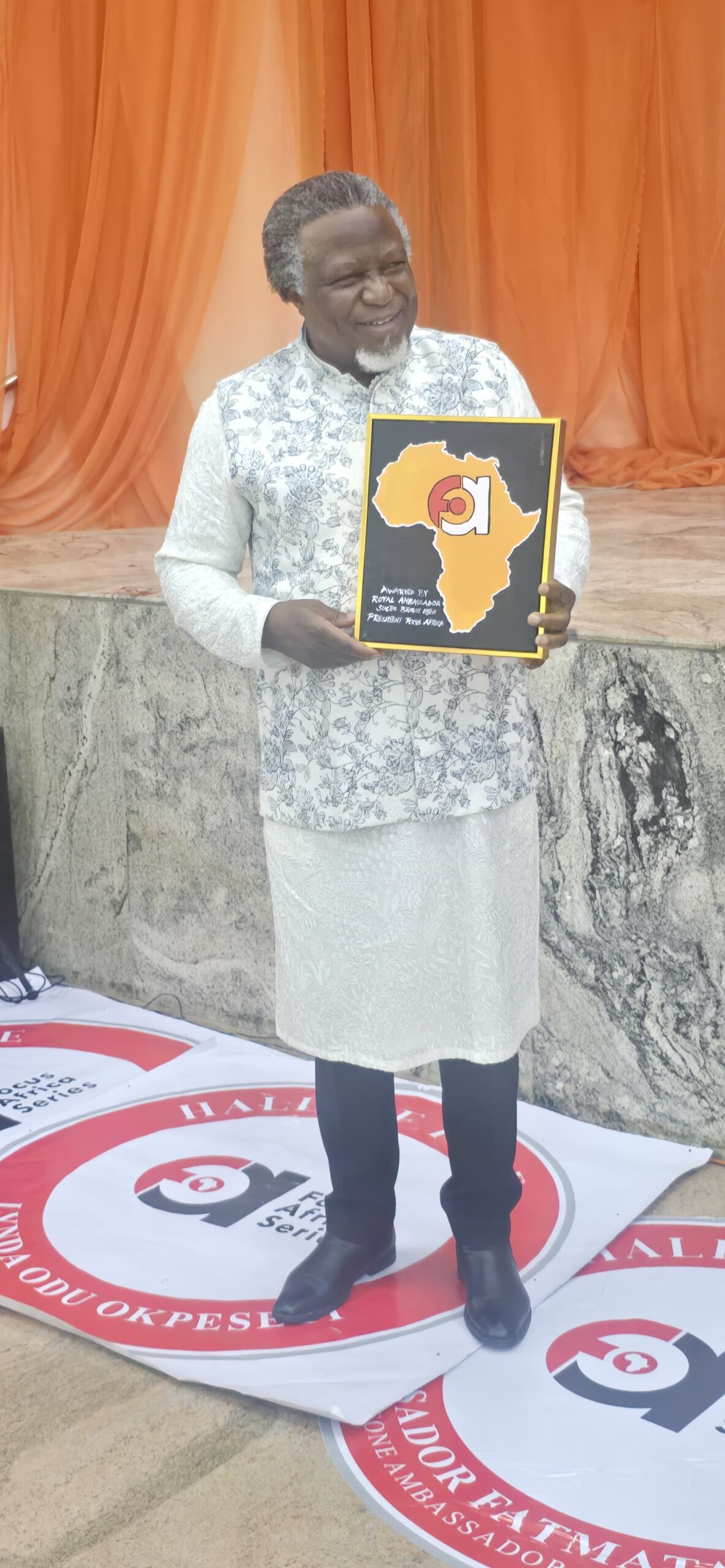
That timeless African tradition found a modern expression on June 25, 2026, at the Shehu Musa Yar’Adua Centre in Abuja, Nigeria, where Focus Africa inaugurated its prestigious Hall of Fame, immortalising six distinguished Africans whose contributions have shaped governance, business, diplomacy, academia, philanthropy and public service. The landmark event was held under the auspices of the Nigerian Presidency, particularly the Office of the Secretary to the Government of the Federation, and was patronized by Ecofairs, Black Mint Africa Consulting, Afri-Euro, the Focus Africa Series, among other strategic partners.
The modern Hall of Fame traces its origins to the United States in the late nineteenth century as a formal institution for preserving the legacies of individuals whose achievements transformed society. Since then, the concept has spread across the world, recognising excellence in sports, science, business, politics, the arts and public service. More than awards, Hall of Fame institutions preserve history by ensuring that exceptional lives continue to inspire future generations. For Africa, the concept carries even greater significance. It enables the continent to celebrate its own heroes through its own institutions, preserving African success stories while inspiring young people to pursue lives of integrity, innovation and service. The Focus Africa Hall of Fame embodies that vision, with only six eminent Africans making up its inaugural class and the next induction scheduled five years from now.
Among those pioneers is Cameroon’s Eric Chinje, one of Africa’s most accomplished journalists, communicators and international development strategists.
For Cameroon, Chinje’s induction is far more than a personal accolade. It is recognition that excellence nurtured at home can command global respect.
Over a distinguished career spanning decades, Chinje rose from journalism to become one of Africa’s most respected media professionals before serving as Director of Communications at the World Bank, helping shape global conversations on development, governance and poverty reduction. Long before his international appointments, however, he had already secured a unique place in Cameroon’s media history. He remains the only Cameroonian journalist ever to have conducted exclusive one-on-one interviews with the President of the Republic, Paul Biya. In a country where such interviews have been exceptionally rare, the encounter became a defining moment in Cameroonian journalism and a testament to the professionalism and credibility he commanded at the highest level of the State.
Yet this honour transcends one remarkable career. It is equally a tribute to Cameroonian journalism—a profession that has endured difficult times while seeking renewed relevance in an increasingly polarized and fractured society. Amid political tensions, economic hardship and security challenges, journalists have continued to serve the public under demanding circumstances. Chinje’s continental recognition is therefore a reminder that Cameroon has produced media professionals capable of excelling on the global stage. It restores pride to a profession searching for renewed purpose and celebrates generations of journalists whose commitment to informing the public has often come at considerable personal and professional sacrifice.
Joining Chinje in the inaugural Hall of Fame are Dr. Martha Namundjebo-Tilahun of Namibia, Ambassador Fatmata Sawaneh of Sierra Leone, Princess Omotade of Nigeria, Hon. Paul Dhel Gum of South Sudan and Prof. Doko Ibrahim of Nigeria. Together, they represent the diversity of African excellence across entrepreneurship, diplomacy, governance, academia, philanthropy and public service.
The significance of the Focus Africa Hall of Fame extends well beyond recognising six exceptional individuals. It reflects a continent increasingly determined to define excellence on its own terms, celebrate its own heroes and preserve its own narratives of success. By institutionalising recognition, it creates a permanent archive of African achievement, reminding future generations that greatness is measured not by wealth or titles but by the enduring impact one leaves on society.
Perhaps that is why this story begins in Muteff. The people still remember Bobe Jacks Sanni not because of the shop he once owned but because of the cause he championed. In much the same way, Eric Chinje’s induction into the Focus Africa Hall of Fame is about far more than professional success. It is the immortalisation of a life dedicated to excellence, a tribute to Cameroonian journalism and a powerful reminder that the greatest legacy anyone can leave is one of service. In honouring the grizzled journalist, Africa has honoured not only one of its finest communicators but also the enduring values that are found in little known communities like Muteff and the rest of Africa.