


Colbert Gwain | The Muteff Factor (formerly The Colbert Factor)
One quiet afternoon in Muteff village, as elderly farmers relaxed beside heaps of freshly harvested coffee beans after a long day in their plantations, a heated discussion emerged among a group of young graduates in the village square. One lamented the absence of jobs, while another put the blame squarely on government. A third spoke bitterly about years spent searching for employment after university without success. Meanwhile, in school they had been led to believe that Cameroon was a land of milk and honey.
As the debate intensified, an elderly farmer who had listened silently for several minutes calmly interrupted them with a proverb that immediately silenced the gathering: “The bird that waits for another bird to build its nest will sleep in the rain.”
That moment captures one of the deepest crises confronting Cameroon’s youth today. They have gone through an educational system that often teaches students how to pass examinations but rarely teaches them how to build wealth, manage money, create enterprises, or navigate economic realities.
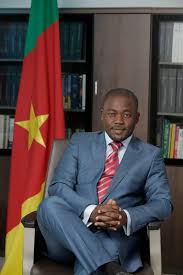
It is precisely this gap that Bony Dashaco, a renowned Cameroonian-born entrepreneur and media mogul, sought to address in his National Day message to Cameroonian youth. His intervention was more than a patriotic statement; it was an honest call for entrepreneurial education and financial literacy to become central pillars of Cameroon’s learning system, beginning even at the basic education level.
Bony Dashaco, who is a shining example of what he preaches, emphasized that entrepreneurship among young people can become “a powerful driver of economic resilience, innovation, and job creation.” But perhaps the most transformative aspect of his message was his insistence that entrepreneurship and financial literacy should be integrated early into school curricula rather than treated as optional knowledge acquired later in life.
His argument strongly echoes the philosophy popularized by Robert Kiyosaki in the influential book Rich Dad Poor Dad. In that work, Kiyosaki criticizes traditional educational systems for producing academically qualified individuals who often remain financially illiterate. According to him, schools largely prepare students to become employees rather than entrepreneurs or financially independent thinkers.
One of Kiyosaki’s most famous observations states: “The single most powerful asset we all have is our mind. If it is trained well, it can create enormous wealth.”
This insight aligns remarkably with Dashaco’s vision for Cameroon. Both men recognize that the problem is not merely unemployment; it is the absence of entrepreneurial thinking and financial education. Many young Africans graduate without understanding concepts such as budgeting, investment, assets, liabilities, cash flow, or wealth creation. Yet these are essential life skills in the modern economy.
Kiyosaki further warns in Rich Dad Poor Dad that “The poor and middle class work for money. The rich have money work for them.” This distinction exposes a painful reality across much of Africa, where education often conditions young people to seek salaries instead of building enterprises and investments capable of generating long-term wealth.
Dashaco’s call for practical entrepreneurial modules, incubation programs, school enterprises, mentorship, and financial literacy directly confronts this outdated model. His proposal seeks to cultivate a generation capable not merely of earning income, but of understanding wealth creation itself.
His ideas also resonate strongly with the principles advanced in Midas Touch, another on entrepreneurship book co-authored by Donald Trump, foremost entrepreneur and current U.S. President, and Robert Kiyosaki. In Midas Touch, the authors explore the entrepreneurial mindset required to build successful businesses and transform ideas into impactful ventures.
The book identifies characteristics such as passion, resilience, focus, leadership, and adaptability as essential ingredients for entrepreneurial success. Most importantly, it argues that entrepreneurship is about developing the courage and mindset necessary to recognize opportunities where others see obstacles.
This perspective mirrors the realities facing Cameroon today. Amid unemployment and economic uncertainty, many young people see only hopelessness. They resort to traveling abroad by all means, not realizing, as Dashaco exemplifies by his own life, that grass is greenest where it is watered. As an entrepreneurial thinker, he sees possibilities in agriculture, technology, media, renewable energy, crafts, tourism, and the digital economy.
Dashaco’s emphasis on “learning by doing” through school-based enterprises and mentorship programs also reflects one of the central ideas in Midas Touch: real entrepreneurial education happens through practical experience, experimentation, adaptation, and resilience and not merely through classroom theory.
As Robert Kiyosaki famously argues, “The most important word in the world of money is cash flow.” Yet across many African schools, students graduate with advanced certificates without understanding how businesses generate revenue, manage expenses, attract customers, or sustain operations.
This is why Dashaco’s intervention carries profound national significance. He is not simply encouraging entrepreneurship as a side activity; he is advocating for a cultural and educational transformation capable of reshaping Cameroon’s economic future.
As Nelson Mandela once declared, “Education is the most powerful weapon which you can use to change the world.” But education must evolve beyond rote learning and examination culture if it is to truly transform societies.
Back in Muteff, the elderly villager who questioned the unemployed graduates eventually concluded the discussion with a proverb that left everyone reflecting deeply: “A child taught only how to read books may still remain poor if he is never taught how to read opportunities.”
That wisdom perhaps best summarizes the essence of Bony Dashaco’s National Day intervention. Like the lessons found in Rich Dad Poor Dad_and Midas Touch, his message challenges Cameroon to rethink education not merely as a pathway to certificates and salaries, but as a foundation for creativity, financial independence, innovation, and nation-building.
For Cameroon’s youth, the message is unmistakably clear: the future will belong not to those who wait endlessly for opportunities, but to those prepared to create them.