Colbert Gwain | The Muteff Factor (formerly The Colbert Factor)
One quiet afternoon in Muteff village, shortly after the rains had softened the earth and sent streams of muddy water winding through the footpaths leading to the market square, a heated disagreement broke out between two elderly farmers over the ownership of a small piece of farmland separating their coffee plantations. For several days, both men had threatened to take the matter before the courts in Fundong, each convinced that the law would vindicate him.
As tempers rose and younger villagers gathered around to watch the unfolding quarrel, an elderly widow who had silently listened to both sides slowly stood up and addressed the crowd with words that immediately calmed the tension.
“Even when the law gives one man victory,” she said softly in the Kom language, “hatred can still destroy the entire village. But when love enters the matter, even enemies can eat from the same plate again.”
The market square suddenly fell silent.
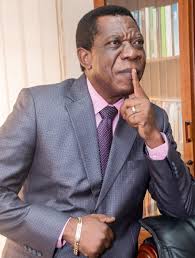
That simple but profound wisdom from a remote Muteff village appears to mirror the growing global message being championed today by renowned Cameroonian legal luminary and international peace crusader, Sir Dr Ntumfor Barrister Nico Halle, who is increasingly urging world leaders to place the “rule of love” above what he describes as the dangerously “bastardized rule of law.”
Speaking recently to The Muteff Factor, the respected Barrister and Solicitor of the Supreme Court of Cameroon lamented what he sees as the moral collapse of modern governance systems.
“The world is in shambles because of the rule of law,” Ntumfor Nico Halle declared. “The rule of law is not meant to bring order. It’s meant to protect some people. Each constitution is often designed to protect the bourgeoisie and the privileged class, and not everybody.”
According to him, this explains why many societies across the globe continue to experience deep inequality, conflict, corruption, and instability despite possessing constitutions, courts, and democratic institutions.
“And that’s why the rule of law can never bring peace to the world,” he argued. “What will bring peace to the world will be the rule of love, or what you may call the law of love.”
His reflections strongly echo the Biblical teaching found in the Gospel of Matthew, where Jesus Christ, in Matthew 22:37-39, described love as the greatest commandment: “Love the Lord your God with all your heart and with all your soul and with all your mind… and love your neighbour as yourself.”
Ntumfor Nico Halle repeatedly returned to this Biblical foundation during his reflections, insisting that humanity’s current crises are fundamentally moral crises.
“If we were to love each other as ourselves,” he explained, “we will share God’s gifts on Earth equitably. There will be no poverty. There will be no unemployment. There will be no misery. We will have sufficient roads, hospitals, and infrastructure. If the rule of love were implemented, all people would have their basic amenities and there would be no need for conflict.”
To many observers, his philosophy seeks to remind humanity that justice without compassion eventually becomes cold, manipulative, oppressive, and destructive.
Indeed, several of the world’s most devastating conflicts today appear rooted in exactly the moral decay Ntumfor Nico Halle is decrying — the absence of empathy, fairness, dialogue, and genuine concern for human dignity.
The ongoing war between Russia and Ukraine continues to claim thousands of lives while displacing millions of civilians. In the Gaza Strip, the prolonged violence between Israelis and Palestinians has produced one of the world’s gravest humanitarian crises, with innocent civilians bearing the heaviest burden.
In Sudan, a brutal power struggle has devastated communities and deepened human suffering, while conflict in the eastern Democratic Republic of Congo continues to fuel displacement, insecurity, and poverty despite the country’s immense natural wealth.
Closer to home, Cameroon’s Anglophone Crisis remains a painful reminder of what can happen when dialogue, justice, inclusion, and mutual respect gradually collapse. The insurgency in the Far North Region linked to violent extremism has equally exposed the consequences of poverty, marginalization, hopelessness, and social neglect.
For Ntumfor Nico Halle, these crises cannot be resolved merely through military force, legal proclamations, or political propaganda if the deeper moral foundations of society remain broken.
“Since the rule of law has been bastardized,” he lamented, “I am advocating that we make the rule of love stronger. Of course, that is the greatest commandment in the world — love. Just one word: love.”
Across the world today, legal systems increasingly face accusations of political manipulation, selective justice, corruption, discrimination, and abuse of power. In many countries, citizens no longer see the law as an instrument of protection, but rather as a weapon often used by the powerful against the weak.
His message equally resonates with the philosophies of several global moral figures whose teachings transformed societies through love, peace, forgiveness, and nonviolence.
Mahatma Gandhi consistently preached that truth and love were stronger than violence and oppression, while Martin Luther King Jr. famously declared that “hate cannot drive out hate; only love can do that.” Similarly, Nelson Mandela demonstrated the power of reconciliation when he chose forgiveness over revenge after spending 27 years in prison under apartheid rule. The humanitarian philosophy of Mother Teresa equally emphasized that genuine greatness lies in serving humanity through compassion and sacrifice for the vulnerable.
Over the years, Ntumfor Nico Halle himself has consistently stood out as one of Cameroon’s strongest voices for peace, justice, anti-corruption advocacy, reconciliation, and moral leadership. Through decades of mediation efforts and peace crusading, he has repeatedly warned that violence, tribalism, greed, discrimination, and political intolerance can never build stable societies.
His criticism became even sharper when addressing electoral malpractice, corruption, and hypocrisy within political systems.
“When you rig yourself into office, you rig everything,” Ntumfor Nico Halle warned. “You rig your son, your daughter, your mother, your father, your friend, your cousin. You rig the files you are treating. You rig government property. You rig everything that comes your way because you are a rigger.”
He equally condemned what he described as the dangerous normalization of dishonest leadership and public deception.
“You see some people who pass for politicians specializing in stuffing ballot boxes and boasting about it,” he said. “Those are the same people occupying the first pews in church on Sundays, singing the loudest and pretending to worship God. It is all cover-up.”
For him, the present global climate — characterized by wars, xenophobia, hate speech, unemployment, greed, rising inequality, and deepening political polarization — requires leaders who govern not merely through authority and legal instruments, but through humanity, humility, compassion, and moral responsibility.
Although the elderly widow in Muteff spoke in a low tone to the quarrelling farmers, Sir Dr Ntumfor Barrister Nico Halle is boldly and loudly extending a warning to world leaders — that the future of humanity may ultimately depend not merely on stronger constitutions and legal systems, but on whether mankind can rediscover the lost moral courage to govern with love, justice, compassion, and conscience.